Definition:
Interview proctoring ensures the integrity and fairness of virtual or remote interviews by supervising candidates to prevent unethical behaviors such as impersonation and cheating.
Crucial for maintaining credible and ethical assessment environments, proctoring can involve live human monitors or automated AI systems.
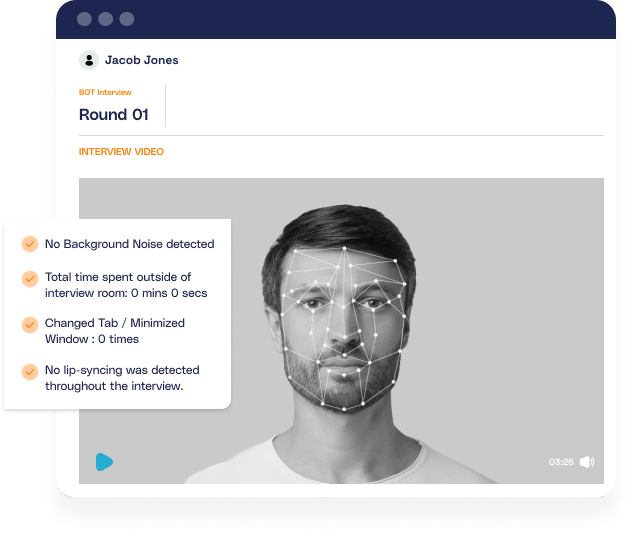
It typically encompasses identity verification, behavior monitoring, and the control of secure environments to uphold the standards of the interviewing process.
Read More: Interview Proctoring in 2025: Everything You Need to Know
FAQ
What are some common types of interview proctoring?
- Identity Verification: Methods include ID checks, biometric analysis (facial or voice recognition), and verification through pre-registered accounts.
- Live Monitoring: Watch candidates in real-time through video feeds. Human proctors or AI monitor these feeds to stop any cheating.
- Screen Recording: This captures the candidate’s screen activity. It helps prevent access to unauthorized resources. It also ensures that all actions during the interview are allowed.
- Audio/Visual Recording: Recording the entire interview session for auditability and further review to validate the integrity of the interview process.
- Environment Scanning: This involves using several cameras or sensors to watch the area around the candidate. The goal is to find any unauthorized materials or help.
How does AI enhance interview proctoring?
AI-powered proctoring systems improve the security and efficiency of interviews. They monitor and analyze candidate activities in real-time. This helps detect unusual behaviors, like suspicious eye movements, keyboard actions, and unauthorized screen sharing.
These systems standardize evaluations, reducing human biases and ensuring fairness. Importantly, while AI improves assessment accuracy, integrating ethical considerations into its deployment is critical.
This includes protecting privacy and data. It also means removing algorithmic biases. These steps are essential for keeping AI proctoring systems fair and trustworthy.
What are the benefits of remote proctoring in professional settings?
Remote proctoring offers significant benefits in professional settings by allowing organizations to conduct assessments with integrity, regardless of geographical boundaries. This technology ensures that only the most qualified candidates advance in the hiring or certification process. It is particularly effective in diverse scenarios, such as certification tests, technical interviews, and high-stakes exams required for professional licenses or security clearances.
It helps stop cheating and focuses on a candidate’s true skills. This keeps certifications valuable and makes hiring more trustworthy. These benefits create a fair and efficient assessment environment. This is important for keeping the standards and credibility of professional evaluations.
How can organizations implement effective remote proctoring?
Organizations can use effective remote proctoring by choosing solutions that fit their needs and work well with current systems. Training for proctors and candidates is important to ensure smooth operations and reduce technical problems or anxiety. Regular updates and reviews of the proctoring system are necessary to keep it effective and fair.
Also, following best practices in data security and privacy is crucial, especially with AI-driven proctoring solutions. This protects candidate information and builds trust. These steps create a reliable and secure proctoring environment that supports fair and accurate assessments.